When people talk about life choices, stability is often treated like the responsible option.
It’s praised. Encouraged. Framed as maturity.
Love, on the other hand, is often described as risky—unpredictable, emotional, something you pursue only if you’re willing to gamble.
So when I stood at that crossroads, I chose stability.
And now, years later, I regret it.
The Choice That Looked Sensible
At the time, the decision felt logical.
One path offered certainty: financial security, predictable routines, approval from people who cared about me. The other offered uncertainty: emotional intensity, vulnerability, and the unknown.
I told myself that love alone wasn’t enough. That practicality mattered more in the long run. That choosing stability was choosing adulthood.
Everyone around me reinforced that belief.
“You’ll thank yourself later.”
“Love fades, security doesn’t.”
“You can grow to love someone.”
I believed them.
What Love Looked Like Then
The love I walked away from wasn’t perfect.
It was messy. Intense. Demanding.
But it was real.
With them, I felt alive in a way I hadn’t experienced before. Conversations flowed effortlessly. Silence felt comfortable. There was a sense of recognition—like being understood without explanation.
Still, the future felt uncertain.
We didn’t have everything figured out. There were risks involved. Sacrifices that would have been required.
And fear spoke louder than feeling.
Why Stability Felt Safer
Stability promised control.
It offered a clear roadmap: career growth, shared responsibilities, predictable milestones.
It felt like a life you could explain to others without hesitation.
Choosing stability meant fewer raised eyebrows. Fewer questions. Less anxiety about “what if.”
I convinced myself that emotional fulfillment could be built over time.
That love could be learned.
That wanting more was naive.
Life After the Choice
At first, things were fine.
Comfortable.
I built a life that worked efficiently. I met expectations. I checked boxes.
From the outside, it looked like success.
But inside, something was missing.
Not dramatically—just enough to notice.
I didn’t feel unhappy.
I felt… muted.
The Slow Arrival of Regret
Regret didn’t arrive all at once.
It crept in slowly, disguised as restlessness.
I noticed it in quiet moments—when routine replaced excitement, when conversations stayed surface-level, when emotional connection felt optional rather than essential.
I began comparing—not between people, but between feelings.
What I felt now versus what I had felt then.
And the difference was undeniable.
The “What Ifs” That Won’t Leave
The mind is cruel when it has unfinished stories.
I started imagining alternate versions of my life.
What if I had chosen love?
What if I had taken the risk?
What if stability could have been built later?
These questions didn’t lead anywhere.
But they lingered.
They followed me through otherwise ordinary days, turning contentment into quiet dissatisfaction.
Loving Without Passion
The life I chose wasn’t loveless.
But it lacked intensity.
Affection existed. Care existed. But passion—the kind that makes you feel deeply connected—was absent.
I told myself passion fades anyway.
But I didn’t realize how much it mattered until it was gone.
Stability without emotional depth felt like living behind glass—safe, but separated.
The Guilt of Wanting More
Wanting more felt wrong.
I had everything I was supposed to want.
How could I justify dissatisfaction?
That guilt kept me silent. It kept me from acknowledging my regret openly.
I didn’t want to seem ungrateful. Or immature. Or unrealistic.
So I kept the regret to myself.
Where it quietly grew.
What Stability Can’t Replace
Stability provides safety.
But it doesn’t provide meaning.
It doesn’t replace emotional connection, mutual understanding, or the sense of being deeply known by another person.
I learned that security without intimacy feels hollow.
Comfort isn’t the same as fulfillment.
And safety doesn’t guarantee happiness.
When Regret Became Clarity
At some point, regret stopped feeling like pain and started feeling like information.
It wasn’t telling me to undo the past.
It was telling me what I value.
Connection. Presence. Emotional honesty.
Those things mattered more to me than I had admitted.
And I learned that ignoring values doesn’t erase them—it delays their impact.
Accepting the Choice
I can’t go back.
And I don’t try to.
Regret doesn’t always demand reversal. Sometimes, it demands understanding.
I made the best decision I could with the fear and knowledge I had at the time.
That doesn’t make it the right decision.
But it makes it human.
What I Would Tell My Past Self
I would tell myself this:
Stability can be built.
But love—real, deeply felt love—is rare.
Don’t dismiss what makes you feel alive just because it’s uncertain.
Uncertainty doesn’t mean danger.
Sometimes, it means possibility.
For Anyone Facing the Same Choice
If you’re choosing between love and stability right now, pause.
Ask yourself:
- What kind of life do I want to wake up to every day?
- What will I regret not trying?
- What matters to me when no one else is watching?
There’s no universal right answer.
But there is an honest one.
Where I Am Now
I live with the choice I made.
I function. I succeed. I move forward.
But I also carry the lesson.
I don’t confuse comfort with happiness anymore.
And I don’t judge people who choose love.
I understand them.
Final Reflection
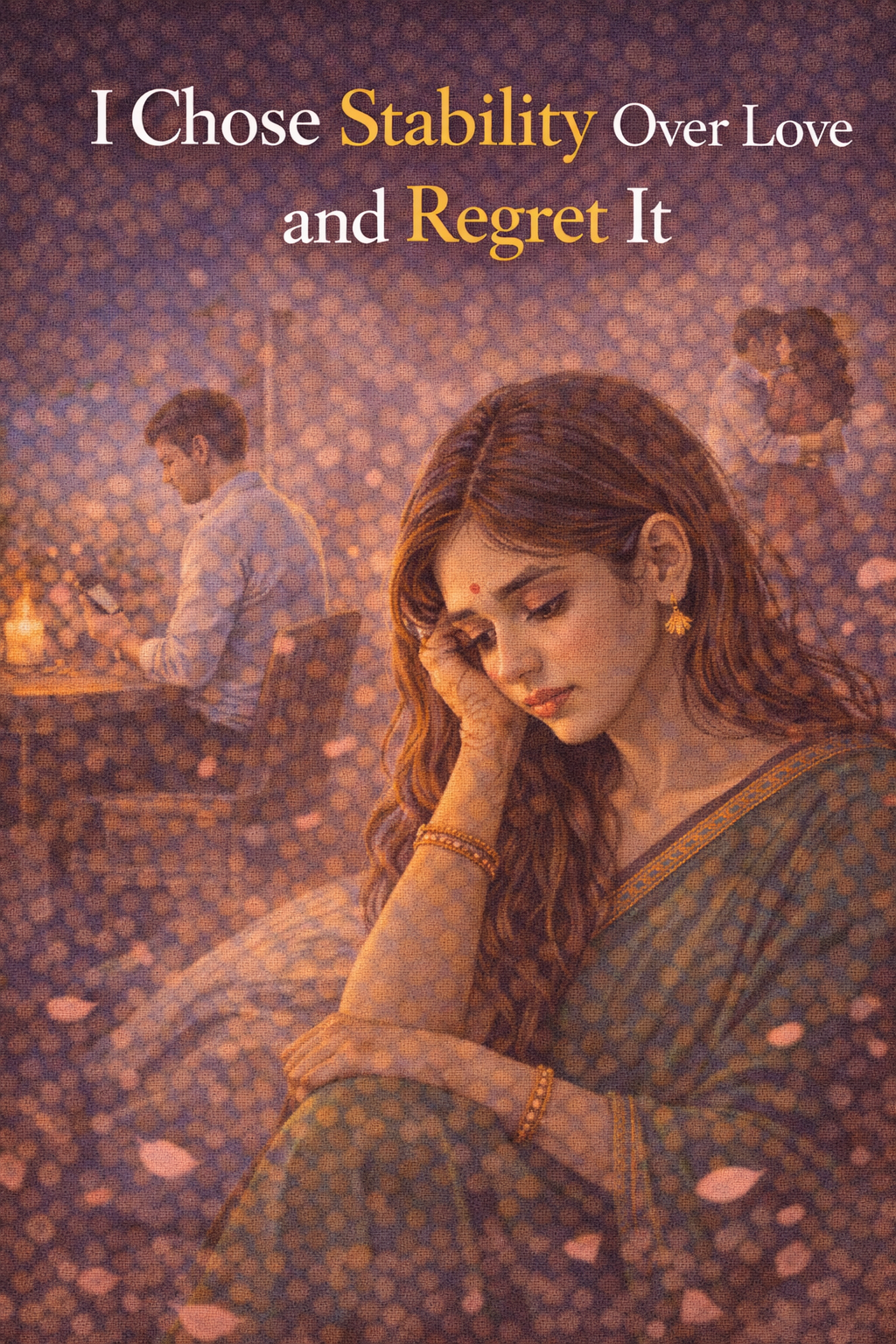
I chose stability over love.
And I regret it.
Not because stability is wrong—but because I underestimated the cost of walking away from what made me feel deeply connected.
Security kept me safe.
Love would have made me feel alive.
And now, I know the difference.